Technology consulting

Smarter systems. Less manual work.

Apex builds the software, integrations, and automation growing businesses need to run better.

Working with businesses across the United States

Strategy through implementationThe same people who scope the work build and document it.
Built on your existing stackWe extend the platforms you already pay for before proposing new ones.
Security-conscious by defaultLeast-privilege access, scoped credentials, and logging on every workflow.
You own what we buildCode, repositories, accounts, and documentation transfer to you.

The problem

Your business should not be held back by manual processes and disconnected systems.

Most operational drag is not one broken system. It is the gaps between them — and the work people do by hand to bridge those gaps.

Staff re-enter the same information into two or three systems.
Applications hold different versions of the same customer.
Customers wait for a response that depends on someone being at their desk.
Reporting is assembled by hand and then disputed in the meeting.
Nobody can see the status of a request without asking three people.
Processes that worked at your last size are now the constraint.
Software gets bought without anyone technical in the room.
The person who understands the process is a single point of failure.

How it fits together

One layer connecting the tools you already run.

Rather than replacing what works, we build the connective layer between your systems: moving information where it needs to go, applying your business rules, and keeping a record of what happened.

See how integration works

How an Apex system fits together Information from email, CRM, documents and spreadsheets flows into a middle layer of business rules, AI and logging, which produces dashboards, automated actions and clean records. Email & forms CRM Documents Spreadsheets Apex layer rules · AI · logging Dashboards Automated actions Clean records

Systems you already runWhat your team finally sees

Outcomes

What changes when the systems underneath actually work.

We do not publish percentage claims we cannot attribute to a named client. These are the categories of improvement the work is designed to produce, and the measures we agree at the start of an engagement.

Less manual work

Hours per month returned to the team by removing re-entry, chasing, and formatting.

Faster turnaround

Time from request to completion shortened by removing the waiting between handoffs.

Greater visibility

Status and performance visible without asking, in a place people already look.

Fewer manual errors

Validated inputs and single-source records instead of transcription between systems.

Better customer experience

Faster first responses, and self-service for the questions that do not need a person.

Systems that scale

Architecture that absorbs more volume without proportionally more staff time.

How engagements run

A structured path from problem to working system.

Each phase has a defined output and a decision point. You are never asked to commit to the whole programme before the first phase has proved itself.

1

Discover

We map your objectives, workflows, systems, and constraints — talking to the people who actually run the process, not only the people who own it.

2

Architect

We design the solution, the implementation plan, the technical architecture, and the success criteria before any code is written.

3

Implement

We build, integrate, test, document, and deploy in visible increments, so you react to working software rather than status reports.

4

Optimize

We monitor performance, gather feedback from real use, and improve the system as volumes and processes change.

Industries

Built for organizations where process is the constraint.

The technology patterns repeat across sectors; the workflows and the vocabulary do not. Solutions are tailored to your operating model and to your security and compliance requirements.

Professional Services

Firms billing time and managing client work across too many disconnected tools.

  • Client onboarding automation
  • Matter and project dashboards
  • Document intake and filing

Healthcare & Life Sciences

Practices and suppliers carrying a heavy administrative and documentation load.

  • Intake and scheduling workflows
  • Document processing
  • Operational reporting

Financial & Business Services

Organizations where reconciliation, reporting, and audit trails matter most.

  • System reconciliation
  • Reporting automation
  • Approval workflows

Real Estate

Teams coordinating listings, transactions, vendors, and long document chains.

  • Transaction tracking
  • Document workflows
  • Lead intake and routing

Retail & E-commerce

Operators syncing catalogue, orders, inventory, and customer records across platforms.

  • Order and inventory sync
  • Customer data consolidation
  • Support automation

Hospitality

Venues and operators managing bookings, enquiries, and multi-site reporting.

  • Enquiry response systems
  • Multi-site dashboards
  • Scheduling automation

Logistics & Operations

Businesses where status visibility and exception handling drive everything.

  • Status and exception dashboards
  • Partner integrations
  • Document automation

Startups & SaaS

Teams that need to ship product and cannot afford to build internal tooling twice.

  • MVP development
  • Internal tools
  • Data pipelines and reporting

See how we work by industry

Featured solutions

Examples of what Apex builds.

Representative solutions from our capability set. Where a project is a delivered client engagement rather than an example, it is labelled as one.

Revenue

Automated lead intake and follow-up

Inbound enquiries are captured, enriched, routed by rules, and put into a follow-up sequence — with response time measured.

Knowledge

AI-powered internal knowledge assistant

Staff ask questions in plain language and get answers drawn from your own documents, with the source passage attached.

Leadership

Executive performance dashboard

The metrics that drive decisions, defined once, refreshed on a schedule, and traceable back to the source system.

Back office

Intelligent document-processing workflow

Contracts, invoices, and forms are read, fields extracted, low-confidence cases flagged, and records written automatically.

Client experience

Customer onboarding portal

Clients see status, upload what is needed, and retrieve documents themselves instead of emailing for updates.

Marketing

CRM and email automation

Contact data stays consistent across platforms and campaign follow-up runs from a single source of truth.

Operations

Custom operations dashboard

Throughput, backlog, and cycle time by stage, so bottlenecks surface while they can still be addressed.

Support

AI-supported customer-service workflow

Repeat questions handled with your actual policy language, with a clean escalation path to a person.

Our work

Proof, not promises.

We publish work we have actually delivered. Anything shown as a representative build is labelled as one, so you always know which is which.

Shipped product

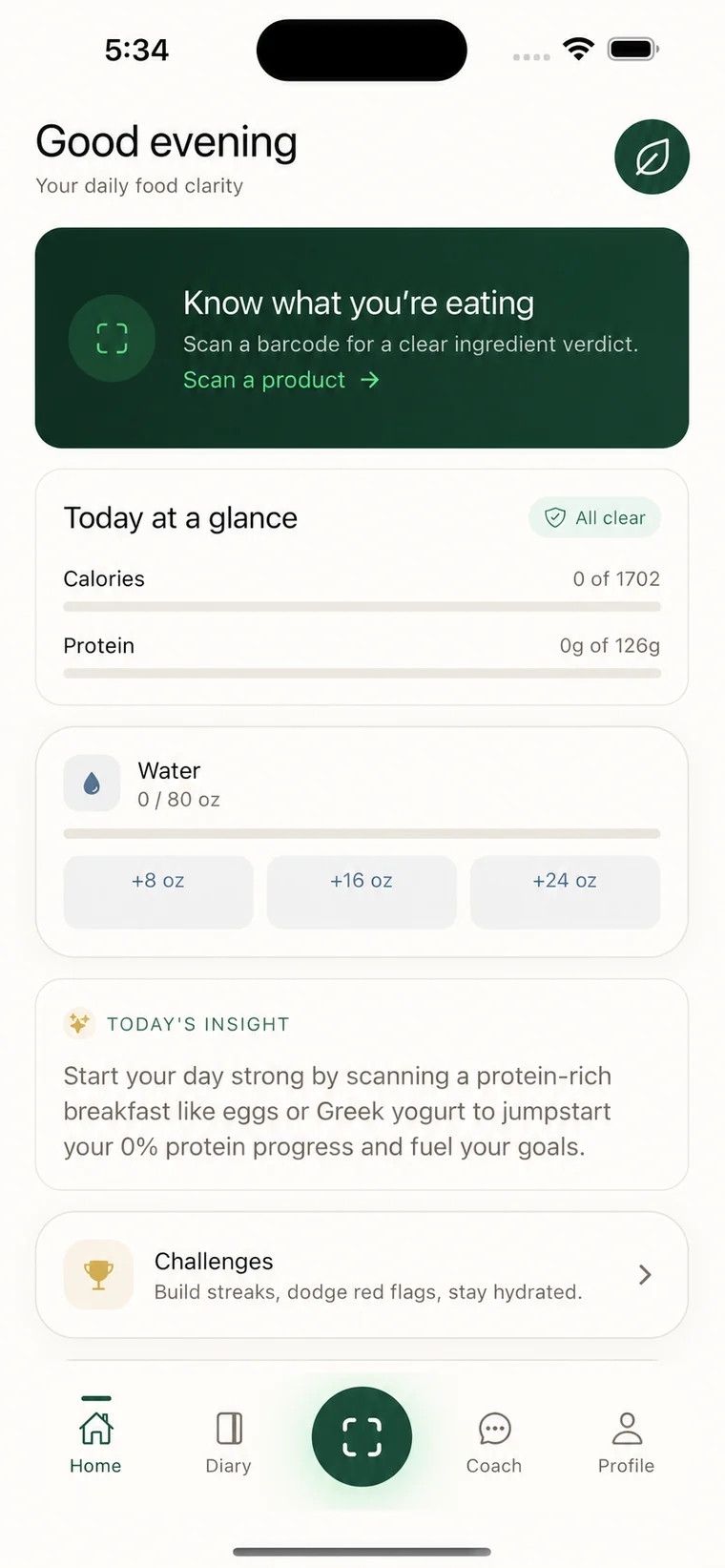
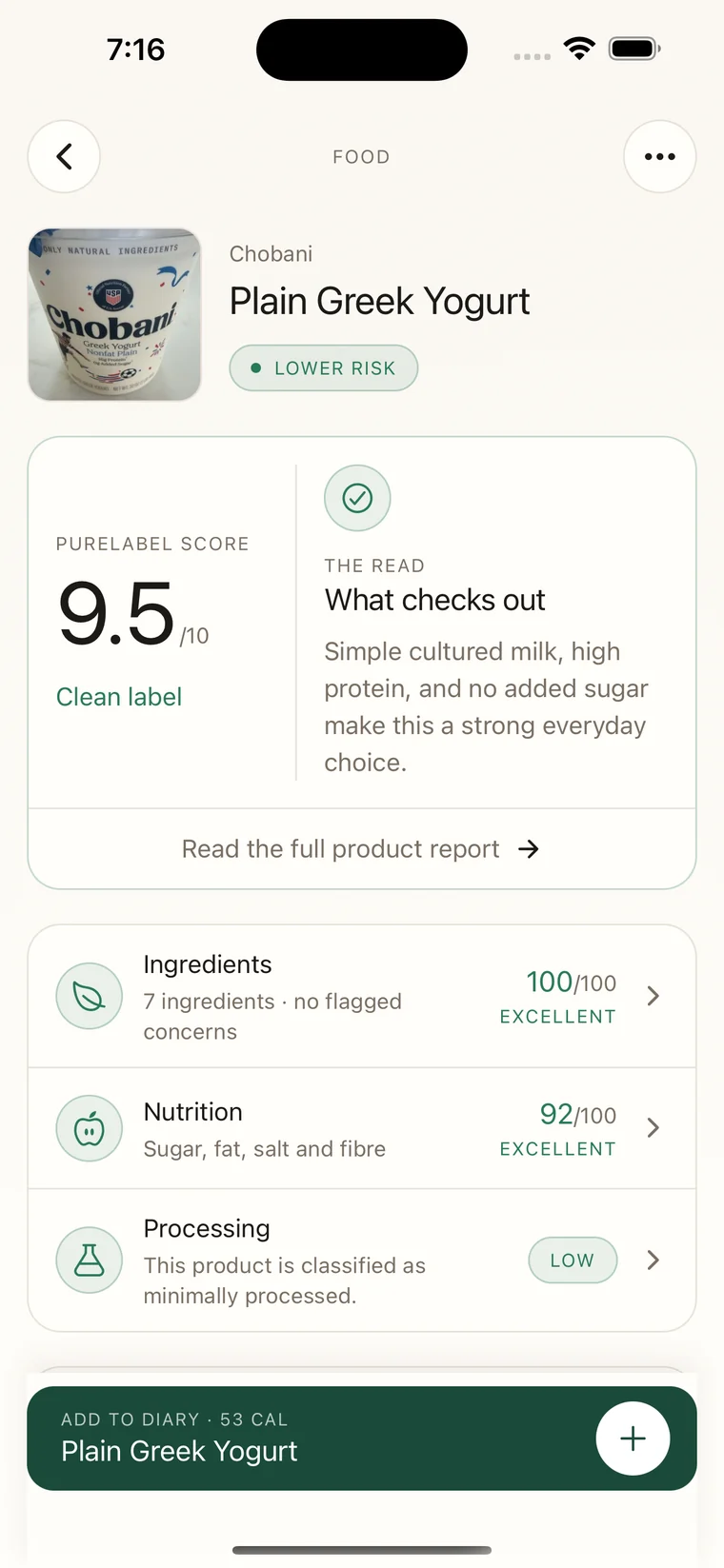
PureLabel — an AI food-transparency app on the App Store

Apex designed and built PureLabel end to end: product direction, interface design, AI-assisted ingredient analysis, third-party data integrations, subscription infrastructure, analytics, and release management.

Challenge
Packaged-food labels are hard to interpret at the point of decision.
Approach
Barcode scanning against public food databases, with AI analysis behind a server-side proxy so no keys or model access sit on the device.
Stack
React Native, managed backend and edge functions, subscription billing, product analytics, error monitoring.
Relevance
The same disciplines we apply to client systems: data integration, AI behind a secure boundary, and shipping something people actually use.
See PureLabel
Example solution

Lead intake and response, end to end

A representative build rather than a client engagement: inbound enquiries captured from web forms and calls, deduplicated against the CRM, enriched, routed by territory and service line, and entered into a follow-up sequence — with first-response time reported weekly.

  • Form and call capture
  • CRM deduplication and enrichment
  • Rule-based routing
  • Automated follow-up sequence
  • First-response reporting
How we build this

Additional client case studies are published here as engagements complete and clients approve the details for release.

Why Apex

Technology decisions should create leverage, not more complexity.

Every recommendation is made against your business case rather than a preferred vendor, a resale margin, or a licence we are trying to move.

Business-first strategy

We start with the constraint and the outcome. Technology selection comes after the problem is defined, not before.

Custom over template

Solutions are built around your actual workflow rather than forcing your process into someone else's product.

Strategy through implementation

The people who scope the work build it. Nothing is lost in a handover between a strategy team and a delivery team.

Built to integrate

Systems are designed to connect with what you already run, so today's project is not tomorrow's island.

Scalable architecture

Built to absorb growth in volume and scope without a rewrite at the next stage.

Clear communication

Plain language, written decisions, visible progress, and documentation you can hand to someone else.

Ongoing optimization

Systems are reviewed and improved after launch, when real usage data finally exists.

Right tool for the job

We reach for the simplest thing that solves the problem, and tell you when a configuration change beats a build.

Questions

Frequently asked

Growing organizations that have outgrown spreadsheets and disconnected subscriptions — typically professional services, healthcare, financial and business services, real estate, retail, logistics, and SaaS companies. The common factor is a process that matters and no longer scales, not a particular headcount.

We score each candidate process on volume, variability, number of handoffs, and consequence of error, then check three practical constraints: whether the data exists in usable form, whether the systems expose an API, and whether there is a named owner. Processes that fail those checks get fixed or simplified before anything is automated.

Yes, and it is usually the cheaper path. Extending platforms you already pay for through their APIs beats replacing them in most cases. We only recommend new tooling when the current stack genuinely cannot express what the process needs.

Yes — grounded in your documented knowledge, scoped by role-based permissions enforced at retrieval, connected to your systems through explicit tools, with human approval on consequential actions and full logging. These are business systems rather than chatbot widgets, and they are scoped and tested accordingly.

Least-privilege access, scoped API credentials held in managed secret storage rather than in code, encryption in transit and at rest, data minimization so a workflow moves only the fields it needs, and logging so any action can be traced. Our full approach is set out on the security page.

You receive the code, repositories, accounts, documentation, and training. From there you can run it in-house, or keep us engaged for monitoring, maintenance, and continuous improvement. Both paths are supported deliberately — the handover is complete either way.

Yes, as a managed engagement covering monitoring, workflow maintenance, integration updates ahead of vendor API changes, security updates, and a regular review of what to improve next. It is a strategic relationship rather than a help desk.

A scoped automation is often two to six weeks. A focused internal tool or portal is commonly six to twelve weeks. Assessments run two to three weeks. Larger programmes are split into phases so something usable ships early rather than everything arriving at the end.

That is usually our recommendation. One high-value process, measured against a real baseline, proves the approach and gives both sides evidence before a larger commitment.

Apex Holdings Group LLC is a New Jersey company, working remote-first with clients across the United States and a concentration in the New York metropolitan area. Engagements run over video calls, shared documents, and access to the systems involved, so location is rarely a constraint on the work.

Send a short description of where work is getting stuck through the contact form. We will reply with an initial read on whether the problem is a fit, and if it is, set up a call to work through the specifics.

Build the systems your next stage of growth requires.

Tell us where your operations are slowing down. We will help determine whether AI, automation, software, or better system integration is the right next step.